
booking •
05Apr23 — 0
Ten-year quest through Development Hell pays off
FILM REVIEW: Dungeons & Dragons: Honor Among Thieves

[PHOTO: An angry little fat dragon, today.]
Contents
Honor Among Thieves is post-woke
Intro
[My first proper Substack post was going to be my reflection on a blog rant about Labour-Party “moderates” that I wrote in November 2016 and never published, but I wanted to start on a positive note, so have a cosy, complimentary film review instead.
And I came to this site in the first place as a geek-for-hire, who accidentally started a Substack while exploring the medium from a technical point-of-view. What better way to do that than to write about an extremely geeky multimedia franchise?
I don’t want to launch by getting cancelled and I want to test all the features of this platform. This is perfect in both respects.
Is my being nice about cult culture boring? You’ll get my political rants soon enough.
Does this article go on too long and say nothing controversial? I wanted to write beyond the size limit of the email format to see what happens, and, if you have no interest in Dungeons & Dragons or have read plenty of similar reviews of the film and you just want A Bit Of Politics, then you can jump straight to “Honor Among Thieves is Post-Woke”.]
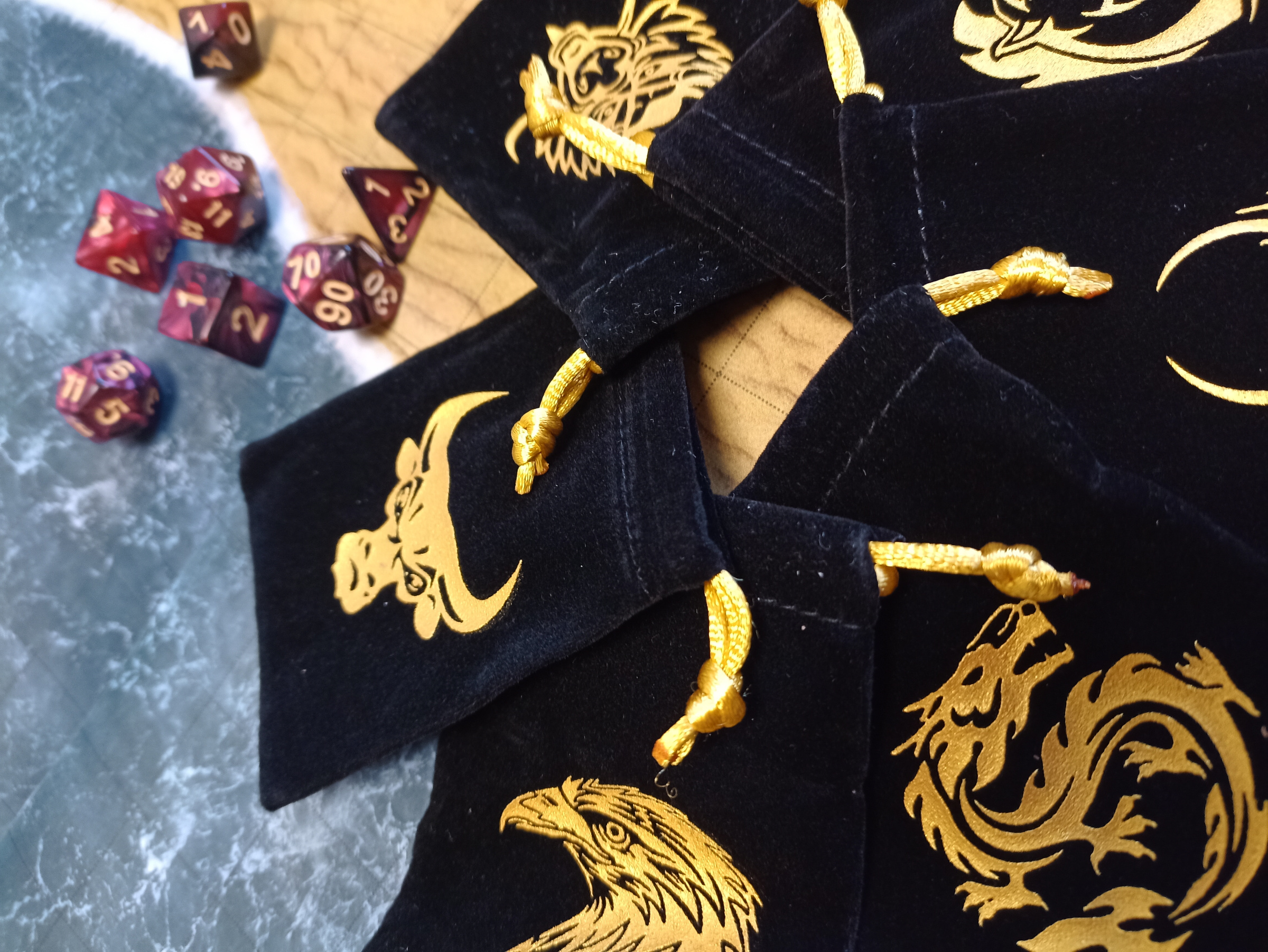
[Photo: As with the habit of smoking, the shiny, tactile paraphernalia of Dungeons & Dragons is almost as addictive as the game itself. This addiction is perhaps one reason why, during its 1990s relative decline, it lost out in popularity with on-the-spectrum males to fantasy wargaming, in which there are so many more bizarre figurines to paint. That role-playing came to dominate the way fans played D&D is ironic, because the game’s creators designed the game for combat.]
Here’s my original Twitter thread about this film:
Revenge Of The Nerds
Like a lot of people since the Netflix debut of 1980s kids’ nostalgia/SF/horror series Stranger Things in 2016, I’ve recently begun to re-explore my childhood interest in the sword-and-sorcery role-playing game Dungeons & Dragons, the game that allowed schoolboy nerds like me—and of course the geeky characters of Stranger Things—to take on heroic fantasy personas and thereby pretend to be strong, sexy, and dangerous.
And “dangerous” even in the real world, where D&D was, at the time in which Stranger Things is set, widely believed to be a gateway to Satanism—as if the Evil One would be interested in recruiting spotty teen virgins with lollipop-stick biceps to his armies of the dead. Though, to be fair, quite a lot of us were good enough at chemistry to manufacture explosives.
As the game itself has grown and developed from its messy, paper-based, Tolkien-bothering origins into its slick, very-online 5th-Edition form, in a 21st century when geeks are tycoons and sex symbols, there have been plenty of attempts to turn its increasingly valuable cult intellectual property into mainstream multimedia #content. Finally, it looks like the current rights owners, US toy giants Hasbro, have found a chest of gold. As often when this happens, they’ve also accidentally made Art1.
The Movie
There are a lot of mainstream media reviews of Dungeons & Dragons: Honor Among Thieves saying a lot of the same things about it, so I’ll get those obvious points out of the way first, then try to say something different about it.
It’s good
Audiences love it. I’m such an anti-elitist about cinema that I am more inclined to put my faith in the great unwashed than soapy dwellers in the media bubble, but you can see from Rotten Tomatoes that critics love it too.
It’s well-written
Like The Wizard Of Oz, no matter how complicated the fairytale gets, the questing protagonists’ motivations are clear. So the story is solid. But, even close up, at the fine resolution of dialogue, the stitching is meticulous.
It’s Pythonesque
A highlight of the script’s needlework is its comedy. Everyone wants to praise the production for “not taking itself too seriously” (perhaps because it’s important to many critics that genre movies shouldn’t be taken too seriously). Obviously, in our post-MCU world, there is Avengers-style banter between the leads, but the plot is just as self-aware.
One example: “Sword-and-sorcery is about quests,” the writers seem to have said to themselves, “But, instead of subverting the trope, let’s double down on it! Let’s go quest crazy! Then, let’s render some of the quests pointless!”
But, within that plot, no one breaks the fourth wall and none of the players out-and-out mugs it up for the cameras; the film is funny because the script is funny, and because the actors delivering the script give themselves completely to it.
And, as this clip shows, it’s Monty-Python funny because, like Python, it takes the arbitrary and absurd rules of the game/philosophy/history seriously and explores the consequences to their conclusion. Believe it or not, not only does this sequence extend to the exhumation of most of the bodies in this war grave, but this joke, which is set up about a third of the way in, continues to the post-credits sequence2.
It’s well-cast
Seldom3 since his turns as Captain Kirk has Chris Pine so transcended his status as an interchangeable Hollywood Chris and delivered a performance distinctive in itself and so fitted to the task in hand. Pine is a bard called Edgin. Among warriors and wizards and witches and the wise, the best he has to offer is charm. In a charm offensive, it’s perfect that his evil antagonist should be played by Hugh Grant, a fake lord called Forge.
Michelle Rodriguez, whose movie debut was as a female boxer, takes the implausible trope of the kickass shortarse girl and, with her build and movement, and by force-of-personality, makes you believe it. But she isn’t just on board as the muscle. She might not be the official protagonist, but her character’s trajectory is the most interesting and, ultimately, the most important. And her love life delivers more Pythonesque visual gags.
The other cast members are just as nicely chosen and, to my personal delight, at least four of them are mixed-race actors. About which more later.
It’s a technical tour-de-force
I have tweeted about this already,
but, beyond the clever trippiness of perspective, there’s also a dedication to giving the fairytale surface sheen of the film’s cinematography—almost cartoonish near-Technicolor at times—some texture and heft. Partly this is down to the choreography of the action sequences, but real craft has been (sometimes literally) poured into the details.
“Every single time we had something physical generated from a character’s hands, we thought, what is the physical metaphor here?” [Compositing Supervisor at ILM] [Todd] Vaziri recalls. “If they’re generating a fireball, we need to make it feel like there was a fireball on set. If another spell is, say, affecting water to generate a giant wave, well, when somebody’s moving their hands around, what comes off of them? How about super fine mist? Maybe you’ll see droplets…maybe you’ll see that it’s emanating from their hands. We wanted to make it feel like the actors had something in front of them. That’s where we want to be.”
It’s true to the game, but not a slave to it
Of course the film takes place in an established realm of the D&D game world, of course it references real species and characters and social structures, and of course it follows the format of an actual game campaign; but there’s more to its authenticity than that. ([SPOILERS!] And it doesn’t stick to the rules anyway.)
Things go to shit in the game because it’s inherently open-ended, human-player-driven, and non-linear. When he prepares an adventure for them, the game-runner cannot possibly know what the game players will do at each turn, so he and they have to improvise when matters don’t go according to either’s plan. And they are very often fixed with creativity. This is one of the many reasons why real D&D is fun. Without spoilery, I have only two words to say about how the on-screen version cleaves to this chaotic goodness: “portal sequence”.
Honor Among Thieves is post-woke
I don’t think it’s an accident that, in a pseudo-historical world that contemporary Hollywood could have remade to feature Cool-Kid social-justice agitprop, this production chose instead to focus on themes of “found family” and good old-fashioned spectacle, especially when the game it’s based on has long been a fantastical refuge for social outcasts wanting to join a gang, away from those Cool Kids. And I don’t think it’s an accident that that choice was rewarded with commercial success.
But the film doesn’t grind any axes for more-unfashionable philosophical positions either—like, say, The Incredibles did. It’s a themed rollercoaster on rails. You get on; you enjoy the ride; and at no point does anyone hand you a campaign flyer. So I’m not calling it anti-woke; I’m calling it post-woke.
Want to do a gigantic, extended fat joke without being accused of fat-shaming? Have a fat non-speaking dragon! BONUS FOR THE FANS: The fat dragon in question is actually canon.
Once They Were Wokerer
As I explain in the final section of this article, the essentials of Dungeons & Dragons are free to play, thanks to its very open licence and generous distribution of the core of the intellectual property. This choice has not only helped interest in the game to spread widely, but spawned a vast commercial ecosystem of third-party games and co-branded commercial partners.
But Kyle Brink, Executive Producer of D&D-the-game had to apologise twice because of a user backlash against trying to change that licence in (at least) two ways:
by insisting on greater control of derivative works, and
by trying to punish users for their politics—anyone using the licence could have it terminated if they produce related content that was:
“blatantly racist, sexist, homophobic, trans-phobic, bigoted or otherwise discriminatory”
You can read more about the licence controversy here, but the obvious point I want to make, and another reason why I chose “post-woke”, is that the property-holders have had their fingers burnt once. They seem to have learned from this experience.
Café-au-lait society
The cod-mediaeval world of D&D undocks the film from any requirement of historical accuracy: the actors can be any colour—in Honor Among Thieves, several of them are more than one colour at the same time—but no one is beating us over our heads with a morning star about this. It simply isn’t a biggie.
And this is made all the less of a big deal by giving major roles to members of the Mixed-Race Massive like Regé-Jean Page and Justice Smith (whose English accent is so convincing throughout I had no idea he was Californian until I looked up his name). You don’t have to worry about diversity auditors asking “How many of the leads are black and how many of the leads are white?” if the answer is “Yes.”
And it’s not just the good guys who are beige. A half-Indian actor [of my own acquaintance!] plays one of the worst people in the film.
Against tribalism
But the world of D&D the game is a world of races—not “races” as in “black, white, and yellow”, but “races” as in Elf and Kobold—and clans. The film can’t avoid this. It doesn’t. One recurring themes is the way in which Edgin’s (and others’) prejudice against certain species/alliances/guilds gets in the way of The Quest, and a particular arc rests on the question of whether or not he was wronged by one order (of peacekeepers) in particular.
The wokest of all the subplots concerns the “mixed-race”—in the sense of “D&D race”—character among the principals, who is rejected from birth by her human parents. The wokeness is less to do with this, but with an ecological threat to the Wood Elves she chose for family. But, just like Pine’s character, she has to learn to trust those she feels betrayed her.
Even the standard Disneyesque message that one should Believe In Yourself, embodied by another member of the adventuring party, is subverted, in the most explicit example in the story, by challenging the idea that one’s calling is inherited, rather than a function of practice and perseverance.
Biological sex doesn’t matter
Long before the trans wars, D&D was a medium through which adolescents could take on whatever sex or orientation they wanted, and the rules of the game encouraged it—yet another way Honor Among Thieves is true to their spirit. No one in this story treats biological sex as any kind of issue. People do what they do, and no one needs to change sex or gender to do it.
Some of its best jokes are about the domestic arrangements of the main characters, but they work independently of sex stereotypes. It’s as if the writers side-eyed the carnage in Harry Potter fandom and made a conscious choice to side-step it.
A message of family and fate, not social justice
I’m not going to spoil anything by describing the climactic moral choice in anything but the most abstract terms. But it’s a choice that has nothing to do with class or colour or climate change. It’s one about karma and kin.
Is this the future?
Given its commercial and artistic success so far, it looks likely that there will be a sequel, so, in the most cynical sense: Yes. Though, like all the best franchise films, it was written without a sequel in mind.
In the political sense, post-woke—rather than either woke or anti-woke—film-making seems to have had a good run recently. If you build a big, bold, fantastical franchise, and put aside ideology, audiences will come.
Of course, there’ll always be party poopers, griping for clicks; of course The Guardian’s loftily dissenting review called the film “passable” (three stars out of five); but it’s beginning to look like the way for art to win over politics is to ignore the ideologues and entertain your audience.
But what about the game?
Why you shouldn’t play D&D
I like Dungeons & Dragons, but it’s not for everyone. There are good reasons why it has always appealed to nerds over normies:
If you play the real thing, it’s complicated.
Even if you’re up for the complexity, to have a feel for what’s going on, it helps to have read some classic fantasy and pre-modern history—or at least to have watched a lot of genre films.
You can play it for free, but it’s better if you invest in a few props to keep track of things. (You don’t need to invest money; you can invest time instead.)
If you’re into pure competition—winning and losing, crushing your enemies, seeing them driven before you, and hearing the lamentations of their women—standard D&D will disappoint you. It’s a role-playing game. If you want to be pretentious, it’s more like collaborative theatre than virtual combat.
It’s the opposite of a videogame: The action takes place at a steady pace in your mind’s eye and not at a noisy 60fps up on a screen. If you have adapted to that level of intense, real-time stimulation in your gameplaying, look elsewhere.
Dungeons & Dragons is absurd. I don’t mention this strictly as a reason not to play the game. But it is something that is fundamental to the question of whether you, personally, would enjoy playing it. For a game of D&D to succeed, you have to, like the cast of this movie, embrace the absurdity and commit to the story. You have to be willing to do things that look silly to outsiders, but doing such things willingly is central to the fun.
Why you should play D&D
But, if you are still a child at heart (perhaps a drama-club child who was never cool enough to be invited there4), enjoy sword-and-sorcery worlds, don’t mind doing some homework, have a handful of friends and/or children on a similar wavelength, a bit of time to spare, and a big table and chairs, then jump in! The worst that could happen is you’ll waste twenty quid and a free afternoon.
D&D is going cheap at Amazon
If you want to play Dungeons & Dragons, you don’t need to buy the full official core rulebooks. Everything you need is online, legally, for free. But, a few weeks back, I pointed out that the full official core rulebooks are available discounted from around £140 to about £86.
Possibly because of the film, they are now even cheaper: at a less weird-sounding price point of £79.99.
But what I would recommend instead, is either this, if you are a beginner yourself and you are introducing kids to the game:

Because, while it contains many elements of D&D proper, it’s much more like a conventional board game, so should ease the transition.
Or, if you are familiar perhaps with earlier versions of real D&D and want to get back into the game with people who are or are not previous players, try this:

Because it’s also cheap right now (£14.99), contains all the basic rules you need to play, a bunch of characters you can pretend to be, an adventure for you all to follow, and a set of dice. There are also lots of videos and other resources online that explain this adventure and can help you refine it and enhance it—including that play-it-on-the-cheap video I linked to earlier.
All of these options do, however, require that you have some friends or willing relatives to play the game with, and one of you has to be the storyteller/referee: The Dungeon Master. I’m not sure that it’s a weakness or a strength of Dungeons & Dragons as a game for nerds that you can’t play it if you’re a nerdy no-mates—unless you go outside and find some mates.
1
—not Elite Art, but definitely Popular Art.
2
Actually mid-credits sequence.
3
I strongly recommend Hell Or High Water as a Pine at his finest..
4
I’m not bitter.
04Apr23 — 0
Testing "podcasting"
[taps mic]
03Apr23 — 2
Mistakes Have Been Made
When you toy with an idea, sometimes it toys back
Welcome now, my friends, to the show I didn’t intend
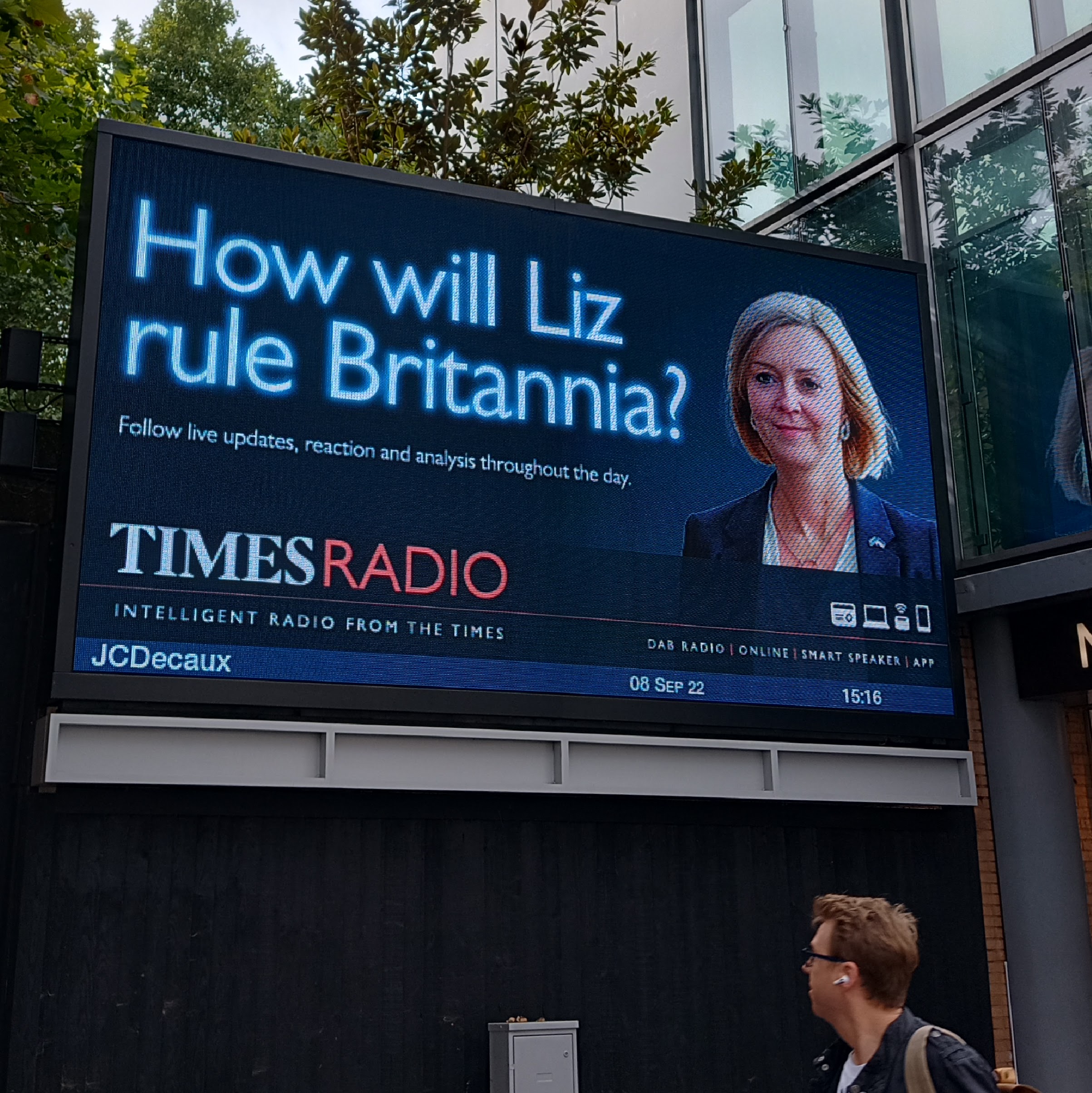
[Photo taken by me on Tottenham Court Road, London, between the death of Queen Elizabeth II and the defenstration of Prime Minister Liz Truss.]
I put things on the Web for money and I used to blog for fun, so it was odd that I hadn’t even played with Substack, if only so I could have an informed discussion with clients about it. This weekend just gone, I played with Substack. Then, it played me. This morning, to my shock, someone subscribed to my Substack, which I had told zero people about and didn’t know was public.
Don’t get me wrong: I always planned to get around to starting a Substack; though I didn’t want to get around to it this weekend just gone. But I’m here now so I’d better get on with it, because I’ve just told people on Twitter and they’ve started signing up too.
I’ll do some free posts first. If that works, I’ll try making things worth paying for as well. At which point, I’ll recommend readers sign up for the paid tiers, which already exist, because, obviously, I wanted to see how that part of Substack worked as well. But, right now, you are currently reading the only content there is.
Thank you for your attention. I’ll try to keep it.
02Apr23 — 0
Coming soon

This is PooterGeek.
02Nov19 — 3
Live comedy review: Geoff Norcott at the Southport Comedy Festival
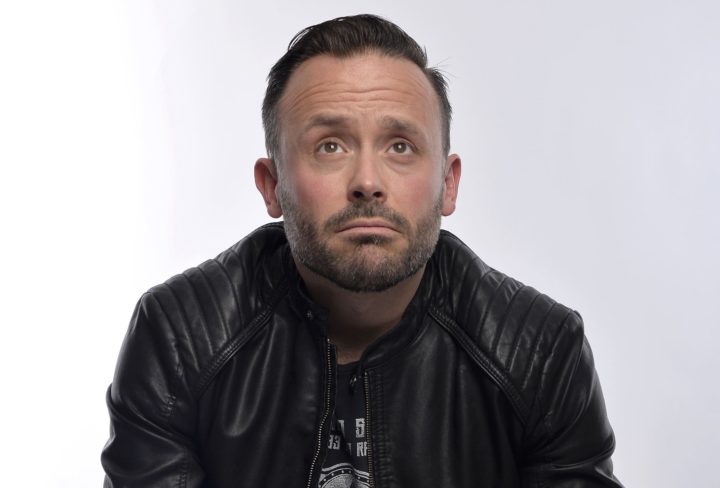
tl;dr: Geoff Norcott is very good indeed. If you get a chance to see him, take it.
One of my CounsellMedia clients is Edinburgh comedy agency Marlene Zwickler and Associates, representing, amongst others, Daniel Sloss and Jimeoin [also appearing at the same festival]. But, a couple of weeks back, I went to the Southport Comedy Festival to check out some of the competition, not least of all because the comic in question, Geoff Norcott is considered one of the more prominent members of a “dissident” mini-movement of non-“woke” stand-ups at the moment, alongside the likes of Simon Evans and Konstantin Kisin—even to the extent of there now being comedy evenings dedicated to “free-thinking comedy“.
You can check out Konstantin interviewing Simon about wokeness in contemporary comedy here.
[I call them by their first names now because they are Twitter mutuals, which is basically like we served in the World War I trenches together.]
Fellow Twitter mutual and showbiz friend [this second bit is a lie] Geoff Norcott isn’t just a Centrist or a free-thinker; he’s an actual, self-confessed Conservative-with-a-capital-‘C’ and Leave voter. I’m a Leave voter myself, but no Tory—even with Jeremy Corbyn and his cranks running the Labour Party right now—so I took along one of yer actual registered Tories with me for market research purposes.
And we both had an excellent time. Not just thanks to Norcott, but also thanks to the organisers of the festival who had set his show up in a lovely, intimate room in the Vincent Hotel and did their best to make us feel welcome and found us seats together despite the unallocated layout. Even in such a close-up, exposed setting, Norcott exhibited no hint of nervousness and one impression that persisted long after the show was over was how fluent he was throughout. Like an accomplished writer of pop songs, his style is “eloquent vernacular”: using everyday language (and everyday situations) to convey subtle and non-obvious ideas, while being consistently funny. The speed, unflashiness, and density of his line-spinning is such that he can even leave some of his best asides almost to be swallowed by the laughter at his main gaglines.
Ironically, given that he is mostly known to non-fans for his politics, it was his first, more domestically oriented, set that was the most effective. While he made the case for there being real differences between the sexes that he thinks that large parts of the Left have been foolish to ignore or deny, he used that fact, mostly, to make gags at the expense of men: from their huffing out of WhatsApp chat groups over trivia to their frankly abusive behaviour towards each other in public. And, of course, he found a couple of male audience members at the front to single out for particular mockery (one of whom gave as good as he got).
That’s a particularly pleasing thing about the niche Norcott occupies/has helped to create, that you find yourself all the more conscious of when you’re watching someone of his class and political leanings perform in a northern seaside town: His material is free of the racism and crude stereotyping of the proverbial unreconstructed 20th-century working-mens’-club comic, but he is their equal in his battle-honed technique and rapid laughter-delivery.
So, yeah, go to strike a blow against the conformist left-Liberal comedy blob, but stay to hear some thoughtful material about how we relate to each other that’s both funny and makes yer think, and to enjoy a real pro at the top of his game—even if I don’t do his Website.
20Aug19 — 0
Republic Interiors

I have a new client. They’re pretty niche, but if you’re looking for some wholesale designer furniture for a café or bar or restaurant, you might want to check out Republic Interiors.
27Dec18 — 0
The Wykehamist Fallacy
[I’ve created this post as a public service, because there are few places on the Web where this fallacy is recorded, and the places where it is strike me as liable to linkrot.]
A “Wykehamist” is someone who went to Winchester College. The Wykehamist Fallacy has been a source of some terrible errors in Western foreign policy, so it’s a shame it isn’t more widely known and discussed. This is a neat summary of it:
We should remember the advice of Lord Renwick, a Foreign Office mandarin and Labour peer. He told young diplomats from good families that their background made them suckers for “the Wykehamist fallacy”. When they went abroad, they were in danger of believing that foreign potentates merely struck blood-curdling poses for effect. For all the bombast, they would think that, underneath, these must be civilised men with an ironic sensibility who might have been educated at Winchester. “They haven’t,” said Renwick. “Actually, they’re a bunch of thugs.”
This is a quote from a Nick Cohen article about UKIP. Nick hates UKIP so wants to cast them in a criminal light. Plenty of unpleasant people have been members of UKIP, but to call it a party of thugs is both inaccurate and counterproductive. Indeed, their widespread false characterisation as such almost certainly played a part in their being successful in their core and founding goal of getting the UK out of the EU.
08Dec18 — 0
The Moral Degradation of The Labour Party
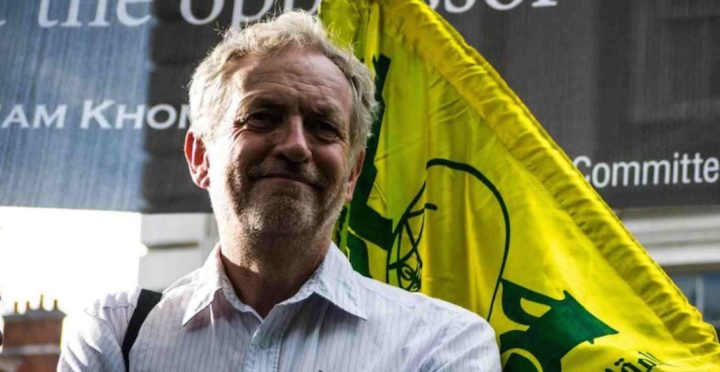
The UK Labour Party’s moral decline began with Ed “My Parents Are Refugees” Miliband’s betrayal of Syrian civilians for petty party-political ends. When I saw Labour MPs raise their arms in Parliament in triumph at winning a vote to abandon children to gas attacks, I resigned my lifelong membership of the party.
But the main reason I will likely never return to Labour is that it has become an institutionally racist political party. This speech, Jews, the British Labour Party, and How We Fell Out, by David Toube of Quilliam is one of the best summaries of how such a great, progressive institution sank deep into this swamp of hatred under Jeremy Corbyn.
It’ll take you a few minutes to read, but it’s worth the time. It’s cool and accurate and sober, and, by its end, not entirely depressing. Some highlights:
There are two features which might be said to define British Left wing politics, and figure large in its mythology. The first is that the Left is the citadel of anti-racism. The second is that the Left has a monopoly on virtue. Neither of these myths are true.
However, the consequences of these delusions are as follows. When racism emerged on the Left in Britain, it was either minimised, or explained away as an aberration. By contrast, racism on the Right is regarded, including by those who are themselves active in centre Right politics, as a natural danger, a stumbling block to be avoided. For that reason, centre Right politicians have long been alert to the dangers of antisemitism, and have taken steps to establish a cordon sanitaire, excluding antisemites from positions of power and influence, and quickly expelling those who breach that boundary.
…
The part of the Left which has now taken over the Labour Party emerged from various parts of the Left ecosystem, of which one was the so-called anti-War movement. The Stop the War Coalition was a coalition between Stalinists, Trotskyites and Islamists, whose chair was the Leader of the Labour Party, Jeremy Corbyn. That coalition was bound together by opposition to Western and American power. It brought British Left activists into close cooperation with organisations aligned to the south Asian Islamist group, Jamaat-e-Islami, and with the Muslim Brotherhood. Supporters of the Islamic Republic of Iran and its proxy, Hezbollah, played a supporting role.
These organisations were treated as part of an international coalition against what the Left regarded as ‘imperialism’. In this political milieu, Israel was regarded as an imperialist, colonialist venture, to be opposed in every way, and ultimately to be dismantled. When the overt and conspiratorial antisemitism of the various Islamist groups was pointed out by concerned critics, the response of Jeremy Corbyn was to host Hamas and Hezbollah activists in the House of Commons, and to call them his ‘friends’. Their antisemitism was treated as mere rhetoric, or the cry of the oppressed, rather than the all-explaining worldview that it is.
By this means, the Left got into the habit of ignoring or minimising antisemitism. When it came to doing the same in relation to antisemitism arising in their own ranks, amongst predominantly white British political activists, they were already well practiced in the art of the reflexive, dismissive response.
…
In the Marxist understanding of the world, imperialism is recognised as a product of the manner in which the capitalist class captures the foreign policy of the state. Therefore, in a debased form, the personalised critique of capitalism has similarly given rise to a personalised critique of imperialism. Let me give you a few examples.
Two council candidates in separate posts, implied that Israel had created or was backing ISIS.
- A Labour diversity officer, posted a cartoon which made the same allegation. That view was also shared by the deputy mayor of Kensington, Beinazir Lasharie, who also implied that Jews were behind 9/11
- A parliamentary candidate and Mayor argued that the Muslim Tory MP Nadhim Zahawi was “buying oil from ISIS to sell to Israel”
- A Labour councillor posted that “Israel was created by the Rothschilds & what they are doing to the Palestinian people now is EXACTLY what they intend for the world” He accompanied his post with a particularly nasty racist caricature of a Jew: his hands soaked in blood
- Another councillor shared a post in which he opined that “There are only 9 countries in the world without a Rothschild central bank: Russia, China, Iceland, Cuba, Syria, Iran, Venezuela, North Korea and Hungary. Isn’t it funny we are always at war with these countries?”
We then come to a separate category of antisemitic discourse: the denial, inversion, or applauding of the Shoah.
- A Councillor in Luton, described Hitler as “the greatest man in history”
- A Councillor in Oxford compared Israel to Nazi Germany, as did many many others.
- A councillor from Bognor, posted a picture of a child killed in Syria, and expressed the view that “Hitler had a point” and that Zionists should be “put in concentration camps”
- A former Councillor in Norfolk, circulated Holocaust denial material.
There have literally been over a thousand complaints, each involving similar rhetoric, to the Labour Party’s compliance department. There are so many that, instead of giving a structured talk, I could simply have read them out to you. I wouldn’t even be a fraction in to the total before my time was up.
The result of reporting these individuals to Labour has been, to put it politely, mixed. Some have resigned. Some have been expelled. Many others have been cleared. But the largest category of cases are those which await adjudication.
But the part of the talk I recommend most strongly is the part I don’t quote here. It’s the last two sections. If you’ve read the extracts above, but don’t have time to read the whole thing, read those parts of it at least.
14Oct18 — 0
FILM REVIEW: Downsizing
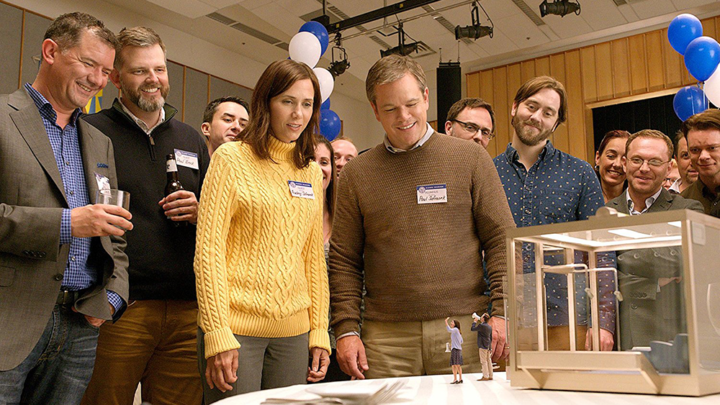
It’s rare I recommend a slice of American art house, but Downsizing is an example of how to make a thought-provoking, medium-budget Hollywood film about big themes without being too clunky or obvious or politically correct or po-faced.
First things first: It’s a pleasure to look at. It would have been so easy, in our era of convincing CGI, for a fable like this to adopt an exaggerated fairy-tale look—heaven only knows what grotesquerie someone like Tim Burton or Wes Anderson would have opted for. Yes, some kind of 1950s suburban golden glow seems to have been applied its palette, but the production and costume design, lighting, and technology is as realistic as it is stylish. Take it from a reformed lab rat, the setting of the opening Eureka! sequence is as close to an actual biomedical research lab as I’ve seen in a film since Contagion.
On the matter of technology, of course, another First Thing to be mention First is that there are good reasons—that would make a classic Oxbridge Entrance Exam question—why “cellular miniaturization” technology wouldn’t work; but this is science fiction, so (contrary to most SF-skeptics’ view of the genre) we have to take the premise as a given to get to the meat of the matter. And, to the makers’ credit, for the most part they do their best to depict the practical implications of implementing that technology, rather than skipping over them for narrative convenience.
Second things second: The quality of the performances of the principals is excellent throughout. One or two of the supporting cast members give the impression of not being professional actors, and that seems to have been a deliberate choice. An unusual quality of this film is that it shows workplaces in a way that is true to life; characters’ motivations centre around their feelings about their work in a way that is truer to real life than it is to most films. It’s ironic that the authentic delivery of lines by what seem to be real working people pulls you out of the movie’s world, when none of the main performances are actorly, but it does.
Now, to the substance: There’s not a great deal to this story. It hinges on its premise and perhaps three big choices by the protagonists. But you care about all those choices, especially the last. Not because the leads are heroic or accomplished or represent something bigger than themselves, or even because you identify with them; but because you come to appreciate their humanity. That alone makes a film worth a couple of hours of your time.
But the simple plotting bears a good load of quiet fun. There are fine, understated visual gags. There is social satire beyond the premise itself. There is physical humour that is perhaps the best small-scale slapstick since Mr Bean did that thing with the toy container lorry. (Watch out at the end for some brilliant work with a walk-on trolley bag.)
This is a (geo-)political satire, Damian, so what about the politics?
Again, to my surprise, this turned out to be one of the most interesting things about the film. The hi-tech eco-warriors who drive the story are presented in a (literal) flattering light (especially at the climax of the tale), but it’s no accident that they are also undercut throughout by other aspects of the presentation, in particular by the dismissive-but-seductive cynicism of Christoph Waltz’s character.
A standard “woke” thread runs throughout that “white people” are to blame for various ills and that, even in utopia, non-whites and immigrants inevitable victims; but there is also a Vietnamese character whose pidgin-English delivery borders on parody. What prevents this trope from being “problematic” is that hers is the voice of another three-dimensional human being. A film with two fully-realised people: one a believable man with believable motivations, and one a believable woman with believable motivations, is another rare thing. Even if you strip everything else away, there’s a world in that small achievement.
09Sep18 — 0
Film Review: Fright Night
Despite my thinking Roddy McDowall underrated, I’ve never seen the original Fright Night; but the 2011 remake was on last week and I thought I’d give it a whirl. I didn’t regret it
As you’d expect from a contemporary vampire film written by a Buffy The Vampire Slayer alumna (Marti Noxon), it was witty and sharp and led by twentysomething actors pretending to be teenagers. It was also, at moments, scary.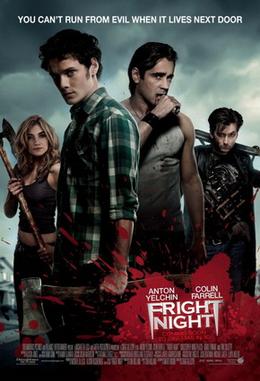
It’s sad that watching the protagonist, played by Anton Yelchin, is a reminder of how much his untimely death deprived the World. He plays a nerd graduating into The Cool Kid tier of the school hierarchy like someone who might well have experienced something similar in his own life. Of course, the satirical moral of the story is that you can gravely regret turning your back on the geek culture that made you what you are.
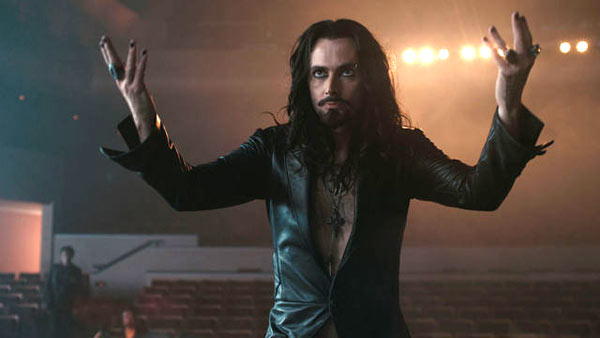
The film’s Las Vegas setting is perfect for a vampire story and, as one of the characters observes, a suburb of a city with nocturnal habits and a transient, showbiz population is the perfect environment for a 21st-century vampire to hide out in. Showbiz is embodied in the story by an excellent, Russell Brandesque turn from David Tennant as a superstar magician with an obsessive, but strictly hands-off, interest in the real-world occult.
The female leads do their bit well, but Imogen Poots doesn’t get much to do beyond being extraordinarily pretty. And typically-Hollywood-too-young mum Toni Colette is almost, but not quite, a cliché.
After a gory-funny cold opening, the plot rightly takes a little bit of time to unfurl its batwings, but the set-up is engaging and assured and leads us, via scary and seemingly insurmountable challenges, to at least two well-judged final showdowns.
Recommended.
15Dec17 — 1
An Amusing Overlap
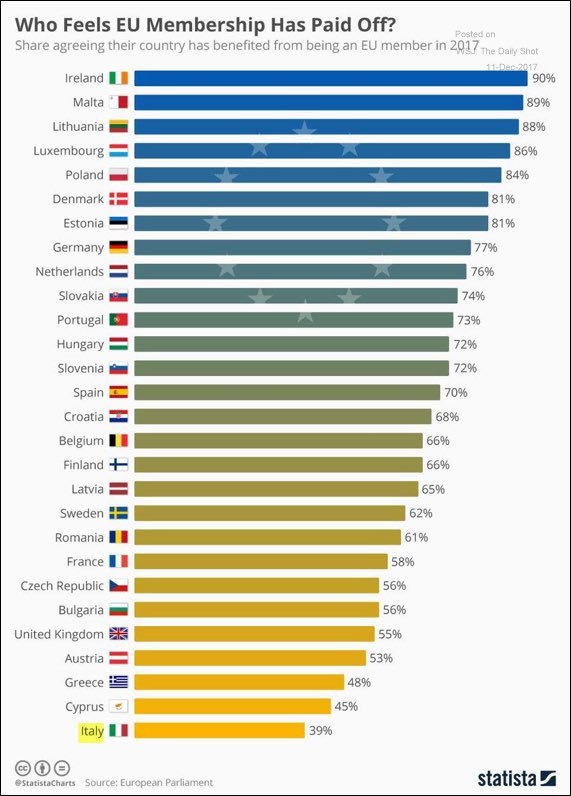
Countries in the Top 18 Most Corrupt Developed Countries In The World that are also in Top 18 Countries In The EU For Belief That EU Membership Has Been Beneficial To Them:
- Ireland
- Estonia
- Portugal
- Poland
- Slovenia
- Spain
- Hungary
- Slovakia
Three countries from the first list that are most striking by their absence from the second list: Greece, Italy, and France. I wonder if that has anything to do with the Eurozone or EU Migrant Crises.
[Thanks to James Dennison on The Twitter.]
13Nov17 — 0
Film Review: The Space Between Us (2017)

The Space Between Us is an odd film. It’s not Great Art and it isn’t great fun, but it has some beautiful moments, some fine acting performances, and its heart in the right place. I have to be careful writing about it, and I recommend not watching any trailers for it, because the other thing it has going for it is that, at least twice, it turns out not to be what you’re expecting it to be (despite being predictable in other ways).
Don’t watch it for a space adventure—although much of it is set in space and the effects are excellent for its budget. Don’t watch it for an art house experience—though it does have an indie vibe about it. If, however, you aren’t prejudiced against laid back romcoms or kid-friendly coming-of-age films, there are many small pleasures to take from it, especially if you’ve ever had a relationship with someone that, despite everything else, is simply impractical. One moment in particular, which should have been cheesy as hell, was moving because of the natural warmth of the protagonists and the carefully established innocence of the mouth out of which the words emerged—and, yes, because good actors can sometimes rescue weak scriptwriting.
You can watch it for “free” if you have Amazon Prime. That’s not a paid ad, because I probably wouldn’t have paid to see it, but I don’t begrudge its makers the time I spent watching it.
18Sep14 — 0
Don’t Go!
Given a lot of the Yes campaigners’ rhetoric, it’s possibly not wise of me, an anti, to suggest to wavering Scots that they should read a blogpost by a pro-intervention Conservative MP in England, but, apart from someone’s friends-only Facebook update, this is the piece I’ve read about the independence vote, taking place today, that has affected me the most:
Mostly I feel a great sadness. It’s the second time in a year that I’ve been deeply troubled by a democratic decision, the last being the vote in the House of Commons not to take military action against Syria after its use of chemical weapons. But this event seems bigger even, and potentially far more damaging, than the shameful loss of resolve in our foreign policy.
And now I also feel dismay. Dismay that we’ve somehow, carelessly, let this happen. Dismay that our broken politics might now break the United Kingdom. Dismay—no, anger—that the people without hope on those council estates have been so let down by socialism that they genuinely see independence as a route out.
Nothing, nothing, has mattered more in my nine years as an MP, or for that matter in my lifetime.
Do please stay with us in the union, Scotland. If the United Kingdom were a boy/girl band, you’d be the fat talented one.
14May14 — 2
Moving and shaking
Just checking in with PooterGeek to update you on my real life.
In the day job, have moved offices in Tamworth from Tame Valley Industrial Estate in Wilnecote to space above designer wool and crafting outlet Tolsons Mill Yarns in Fazeley.

In the evening job, I am now the lead singer of Midlands Stevie Wonder tribute band “Songs In The Key Of Wonder”.
14Dec13 — 6
Burning Down The House
This summary/graphic by Tim Montgomerie of The Times is fun. It imagines the four parties Britain would have if we started from scratch. If we did do such an experiment with voters—if we asked them about real policy choices—I don’t believe that these are the clusters would emerge; most people, especially English people, believe hotchpotches of things that, taken together, have little ideological coherence. It tends to be politics geeks and media commentators who a) can recognize an overarching political philosophy when they see it and b) think politicians should have one. Real people care about getting their bins emptied and worry less about the details of how or why.
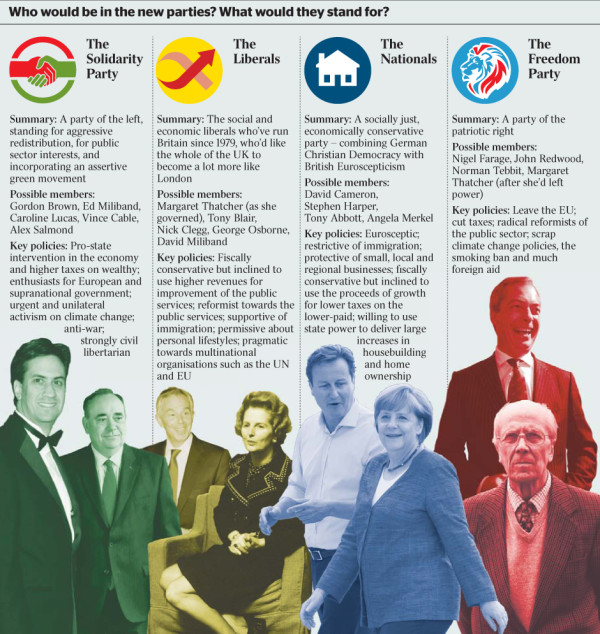
The parties of the scorched Earth
Personally, I’d be a (practical rather than ideological) “(New )Liberal”—except for the bit about wanting the country to be more like London. The summary claims that the people running the country recently have mostly been New Liberals. But most of the parties’ current leaders are behaving as HotchPotchers, even if they aren’t HotchPotchers in their hearts. Since most of the parties are currently led by people who’ve done little in their adult lives other than study or practise politics, this is either strange—surely people who care so much about ideology would want one of their own?—or not strange—if your livelihood depends on persuading an electorate of HotchPotchers, that’s what you’re going to try to do and (appear to) be, regardless of your intellectual tastes.
Gratuitous YouTube video:
13Dec13 — 0
Avoiding identity theft
Here’s an excellent, concicse blogpost that outlines both how identity thieves can scrape sensitive information from your discarded computer and simple steps you can take to make it harder for them to do so.
Stealing someone’s identity doesn’t take a lot of intelligence or even a lot of effort. The bad guys only need you to trust them with your hard drive and a combination of bootable live disks [to] turn your financial and personal life into a living hell.
I use Boot And Nuke to scrub my old hard drives, then I drill physical holes in the overwritten disks.
23Aug13 — 0
Everything You Ever Wanted To Know About Israel But Were Afraid To Ask
 After a summer break, another episode of International Edition with Levy and Counsell is up at Ricochet.com. [iTunes link to follow.]
Here’s the Ricochet blurb:
TV news shows often only turn up in distant countries when the shooting starts. This approach can scare off, or simply puzzle, intelligent and curious viewers who would prefer more backstory and less bullet-dodging. International Edition is back and Judith Levy and Damian Counsell begin this new season hoping to help intelligent and curious Ricochet listeners with this very problem.
This week’s edition the first of a series of Q&A format shows, where we hope to share our answers to your questions—and to use them as a starting point for wider discussion.The first is about the much misunderstood state of Israel and its place in the Middle East, with explanations direct from a real live Israeli who has studied the country and its relations with its neighbours from an academic, a political, and a personal perspective. She also knows a lot about the food.
In this podcast, Judith answers readers’ questions about the land of Iz. Sorry about the dodgy mix. By way of compensation, this episode opens with this classic exchange:
JUDITH: “It’s great to talk to you.”
ME: “It certainly is.”
That’s because I’m AWESOME.
01Aug13 — 1
A Femi-narcissist reader
Do read my previous post first!
And I should credit “Ban This Filth!” for the caption to the Laurie Penny tweet.
In addition to the Dan Hodges blogpost that I linked to at the end of that one, here are some other relevants articles worth reading that I couldn’t shoehorn in.
Here’s Mrs Trellis, writing a Dear Joan letter to feminism to explain why she’s taking some time away. I’m tempted to quote all of it, but here’s a hefty block:
You tell me I’m strong and that I can fight for myself. But when someone threatens me with assault online your reaction is that the forum used should be banned, or heavily restricted. My instinct is that toxic comments will die out when women in public life reach a critical mass and it simply isn’t possible to tweet rape threats to them all without getting RSI, but you say I’m too delicate and your responses deter other women from putting their heads over the parapet.
You tell me that I constantly have the risk of sexual assault hanging over my head. You regularly assume that this has happened to me—that I’ve been groped or propositioned on the Tube and it’s part of a woman’s experience. Well, I haven’t. You alienated me then. You said it was so ubiquitous, I found myself wondering why not me? Am I too ugly even for an anonymous grope? Too unapproachable to pester on public transport?
You tell me I can dress as provocatively as I wish, and I’m cool with that. But at the same time, feminism, you tell me that if I dress provocatively, have photographs taken for money and get those published in a magazine, I am responsible for “pornification”? That this “pornification” has caused an increase in sexual assaults, is destroying the futures of young girls and boys and sending this country to hell in a handjob? So instead you’ve suggested extreme, swingeing censorship, the like of which we’ve only seen before in repellent dictatorships like Iran or China: it’s for my own good, you say. Men can’t control themselves. That made me wonder if you’d listened to yourself during the slut shaming.
You say I can have sex with whomever I wish. But I am not permitted willingly to have sex with people in return for money. God forbid I should film this sort of business and sell these movies on, independently, to interested third parties. In fact, it’s best that such behaviour is utterly, utterly forbidden under any circumstances because, again, some men are slime and can’t control themselves. In absolutely no way whatsoever would this ban lead to anyone being maltreated or exploited, you tell me. No, you say, it’ll prevent that from happening in the first place – but I know you are ignoring the evidence to the contrary.
So, feminism, you’ve done a lot for me, but we are going to go our separate ways for a bit. I know it’s going to be sad for a while, but you have some growing up and some thinking to do. You need to focus on what’s important. You need to stop ignoring the revolting treatment of women in countries like Somalia, Pakistan and Yemen. You need to understand that what makes women free is allowing us to have sex with whom we want, when we want–to dress how we want and have children when we want. That’s not a menu. You can’t pick and choose from it. We need all of it. You may not like some of it, but tough.
Here, God help me, is Brendan O’Neill correctly, I think, identifying the demographics underlying this recent silly season Twitter hysteria.
[M]ost of the recent controversies over insults and threats being exchanged on Twitter seem to spring from this unfortunate coming-together of two variants of lazy people-the leisured classes and the layabout classes. The most offensive tweeters seem to come from the studenty, unemployable end of Twitter’s time-rich population, whether it’s Liam Stacey, the racist student tweeter who was jailed for 56 days, or that 17-year-old bloke who harangued diver Tom Daley, or more recently Oliver Rawlings, the student who insulted Mary Beard. The Daily Mail has a picture of Rawlings “lounging on a boat in Marbella” and describes him as a student with a lot of time on his hands.
Meanwhile, the offence-takers—who often, it has to be said, take offence quite ostentatiously—come from the other time-rich section of Twitter, from the not-very-productive cultural elites who have in recent years almost completely decamped from the real world to the virtual world. So on Twitter we have happily time-rich people on one side and regretfully time-rich people on the other, well-off wasters of time versus less well-off wasters of time, and that is inevitably going to generate envy, spite, sometimes even malice, the exchange of hostilities. One side has all the time in the world to insult people it doesn’t know and thinks it doesn’t like, while the other side has all the time in the world to turn those insults into a big media issue and national campaign.
One recent example of femi-narcissism that I didn’t include in my earlier post is this minor classic of the genre, that could be summarized as “lad mags are to blame for my terrible taste in boys“. The comments are far better than the article—for example, this one:
Daisy, to blame lads mags for the failure of your relationship is ridiculous, and looks like you’ve done it solely to be topical. As someone that’s worked for one of the ‘less high end’ magazines you describe (but don’t name for some reason) for many years I can tell you that not once, ever, have we published a single joke that’s been at the expense of women, let alone a whole section like that every week. Promiscuous are never championed, at all. And sexually adventurous women never, EVER had their value diminished.
I actually doubt you’ve ever read a copy of Nuts, seeing as you’ve quoted an advertising line (incorrectly) that’s not been used since 2005. Why don’t you write a piece decrying the use of close-up photos of celebrity cellulite that the women’s weeklies thrive on? That’s what young impressionable women will be looking at. Or the ‘look at the state of her without make-up on’ pics in the likes of Heat magazine? How about Cosmopolitan, presumably you’re absolutely fine with this. Nothing like treating men as human beings when they fit in the ‘sexiest tennis players naked’ eh?
And interestingly you championed the ’50 shades of grey’ effect in your piece for The Guardian, a book about women submitting themselves sexually to men, and said you hoped it would have an ‘effect’ on teenage girls? As with most of the arguments over the past couple of days, this piece is riddled with hypocrisy.
And, for those of you wondering what Twitter looks like under a real patriarchy where the authorities really take Twitter abuse seriously, here (via Claire Berlinski and Susae Elanchenny is a clanky Google translation of a story about a popular Turkish actress having to report to the police to justify a tweet “insulting” the Prime Minister of Turkey.
01Aug13 — 1
The Femi-narcissists
At the height of the BBC’s “Jimmy Savile crisis”, when police were estimating that the old, dead child rapist and his associates had assaulted at least 40 boys, a female media twitterer tweeted that she had no sympathy for the BBC’s predicament at all, after the way they had blocked her promotion, because she was a woman, over years when she had been a TV executive at the corporation. For her, the aspect of the crimes under investigation most worthy of comment wasn’t the physical and mental suffering of scores of abused young people, male and female, but the way the BBC’s patriarchal culture had interfered with her career development.
Today, Laurie Penny, a opinionist for the Independent, shared this with us:
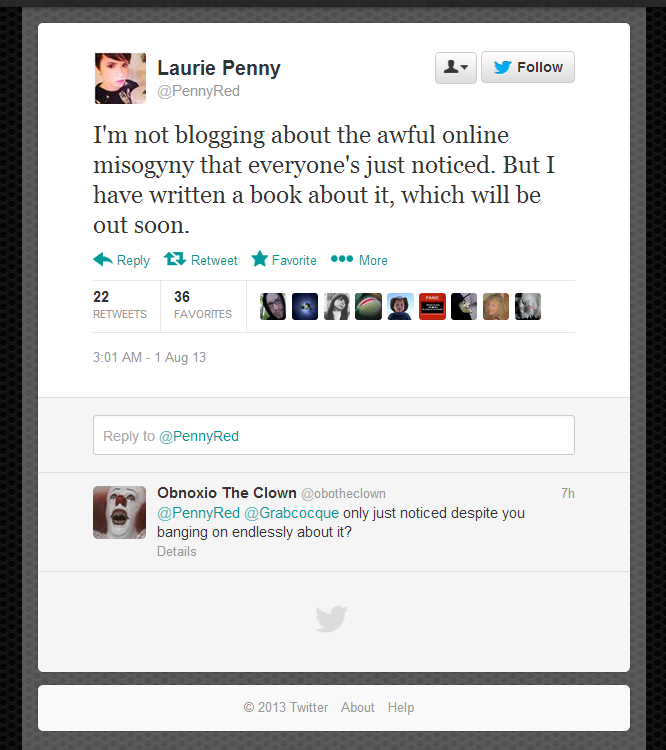
Laurie Penny: “It’s all about me, buy my book to find out why”
And, this week, Stella Creasy, a Labour MP I used to have a lot of time for, said on Newsnight that the problem of spamalanches of threatening tweets—mostly generated by computer programs wielded by teenage boys—like those she had received for supporting feminist campaigns should be taken seriously by the authorities because her experience of abusive Twitter spam was “about violence against women”.
This is a material untruth—at worst, the most recent eruption of this not-even-slightly-new phenomenon is about the anonymous, impotent rage of pathetic young men—but it’s also sick-making—precisely because violence against women is a serious matter, and because no violence had been perpetrated or is ever likely to be perpetrated against Creasy or any of the other prominent successful female users of the free service who were referred to by name during the discussion.
Imagine if you were a female victim of domestic violence watching a powerful, professional, educated woman—with an income several multiples of your own, who could pick up a phone and summon police protection in moments—sit in chair worth more than all the furniture in your home, in a studio of the state broadcasting service. Imagine how you would feel when that woman tried on your battered skin in a public dressing-up game calculated to advance her political interests. Imagine how you would feel if you were a real feminist.
17Jul13 — 0
Another Zimmerman/Martin link
Thanks to Gaby Charing for this opinion piece from William Saletan in Slate:
Trayvon Martin is dead, George Zimmerman has been acquitted, and millions of people are outraged. Some politicians are demanding a second prosecution of Zimmerman, this time for hate crimes. Others are blaming the tragedy on “Stand Your Ground” laws, which they insist must be repealed. Many who saw the case as proof of racism in the criminal justice system see the verdict as further confirmation. Everywhere you look, people feel vindicated in their bitter assumptions. They want action.
But that’s how Martin ended up dead. It’s how Zimmerman ended up with a bulletproof vest he might have to wear for the rest of his life. It’s how activists and the media embarrassed themselves with bogus reports. The problem at the core of this case wasn’t race or guns. The problem was assumption, misperception, and overreaction. And that cycle hasn’t ended with the verdict. It has escalated.
15Jul13 — 0
Testing Storify
15Jul13 — 1
Zimmerman and Martin
As much for my own reference as anyone else’s enlightenment, here are four articles about the Zimmerman case that you might be better off reading than some of the hysterical, race-fixated nonsense in the media. That first link was to the Shooting of Trayvon Martin Wikipedia article.
These next two are from commentators who happen to be black—not that that should make any difference—both suggesting that some observers need to get a grip. The Left’s sad reaction to the George Zimmerman verdict is from Brett Wilkins in Digital Journal,
I used to think that irrationally emotional responses to lightning rod issues were more or less exclusive to the reactionary right.
Boy, was I wrong!
and On The Killing Of Trayvon Martin By George Zimmerman, from Ta-Nehisi Coates in The Atlantic, is an enumerated list of Things Worth Thinking About. Here’s one:
I think the jury basically got it right. The only real eyewitness to the death of Trayvon Martin was the man who killed him. At no point did I think that the state proved second degree murder. I also never thought they proved beyond a reasonable doubt that he acted recklessly. They had no ability to counter his basic narrative, because there were no other eye-witnesses.
One other black commentator I am deliberately not linking to is the Guardian‘s indefatigably stupid Gary Younge, whose article written in the immediate aftermath of the verdict had to be taken down “pending investigation”—because Younge has yet to manage the endangered but legally important “investigate first; write second” tradition of journalism.
The last, George Zimmerman Is Probably Going to Walk, and That’s Not a Bad Thing is a more legally-minded essay that was written before the trial verdict:
Over the past two weeks, trial-watchers have seen a lot of things: bad jokes, anguish, rage, odd disparagement of Zimmerman’s physical capabilities. But there’s one thing we haven’t seen: a compelling, factual rebuttal to Zimmerman’s account of what happened the night Trayvon Martin was killed.
I didn’t know and shouldn’t care what racial grouping Justin Peters belongs to, but, having now seen his byline photo, I would say: white-with-crazy-hair.
21May13 — 0
International Edition with Levy and Counsell Episode 12: Michael J Totten
This week, Judith Levy and I interviewed independent international correspondent Michael J. Totten.
Michael Totten, who has reported extensively from the Middle East, the Balkans, and the Caucasus. Sohrab Ahmari of Commentary wrote of Michael that he
"practices journalism in the tradition of Orwell: morally imaginative, partisan in the best sense of the word, and delivered in crackling, rapid-fire prose befitting the violent realities it depicts."
Michael’s work has appeared everywhere from The New York Times, The Wall Street Journal, and The New Republic to Beirut’s Daily Star.
Michael talks with Judith and Damian about Syria’s descent into sectarian chaos, the American response to the escalating crisis, the Russian angle, and the Lebanese wild card. Join us for a candid and eye-opening discussion of one of the most dangerous hotspots in the world today.
Listen in above or subscribe in iTunes.



10May13 — 1
Sexing down
Here’s an extraordinary thing: a documented cover-up by a US administration—not one imagined by conspiracy theorists:
There's new evidence, obtained by ABC, that the Obama administration did deliberately purge references to "terrorism" from accounts of the attack on the Benghazi diplomatic mission, which killed four people including the US ambassador to Libya.
Conservatives have long maintained that the administration deliberately suppressed the truth about the attacks.
This is the first hard evidence that the state department did ask for changes to the CIA's original assessment.
Specifically, they wanted references to previous warnings deleted and this sentence removed: "We do know that Islamic extremists with ties to al-Qa'ida participated in the attack."
There's little doubt in my mind that this will haunt Hillary Clinton if she decides to run for president, unless she executes some pretty fancy footwork.
State department spokesperson Victoria Nuland is directly implicated, and the fingerprints of senior White House aides Ben Rhodes and Jay Carney are there as well.
Black and white
Republicans are certain to use the Benghazi affair against Clinton should she run in 2016
In the interests of full disclosure I have to say I have not in the past been persuaded that allegations of a cover-up were a big deal. It seemed to me a partisan attack based on very little.
I remember listening to reports from the BBC and others at the time that did suggest the attack in Benghazi was a spontaneous reaction to a rather puerile anti-Islamic video.
And here’s another extraordinary thing: gross editorializing by a supposedly impartial BBC employee:
I understand President Barack Obama's careful use of the word "terrorism" when it actually means something, rather than as a knee-jerk description of any violence by foreigners against Americans, often in order to justify a "war on terror".
But the evidence is there in black and white, unless we doubt the documents obtained by ABC, which I don't.
I hope Mark Mardell has relevant examples to support his implication.
[Thanks to Iain Murray.]
24Mar13 — 0
The opposite of scholarship
John Rentoul quotes India Knight:
Gove’s proposals are, to me, socialist in their intention, which is to equip every child with the sort of education that has traditionally been available to only a very few. How is that wrong? And what do left-leaning academics think they’re doing when they say, “Ooh, no, the children won’t understand any of it; it’s bad for them”? What? As bad as the fact that state-school students are still shamefully under-represented at our top universities?
Even if you don’t have a paid subscription to the Times online, it’s worth following the link to the original article that John Rentoul quotes, because anyone can read its opening paragraphs for free. In them Knight observes, as I often do, that quacks of educationalism write shocking prose. It could be that they are too dim, lazy, and dishonest to draft an open letter in good, plain English. It could be that ideology is the opposite of scholarship.
In related news, Gove has called the bluff of those who falsely accuse him of discounting evidence about educational interventions by commissioning Ben Goldacre to report on the potential for evidence-based educational practice.
04Dec12 — 0
Levy & Counsell podcast 4: National Manners, International Diplomacy, and Statehood at the United Nations
Over at Ricochet.com, our producer Scott named this podcast The Politics of Petulance after an article of the same name by David Horovitz in the Times Of Israel that Judith and I mention towards the end of our discussion.
There are a few other sources I’d like to give credit to: Yau-Man Chan at Skepticblog writing about the curious cult of the Dalai Lama, this piece in The Economist about the squeezing out of Palestinian president Mahmoud Abbas, this commentary by the Israeli ambassador to the US in the Washington Post. this post by Norman Geras at normblog about the crimes perpetrated by Hamas, and this piece by Stephen Pollard, editor of the Jewish Chronicle, about the Israeli government’s latest expansion of settlements.
I’m happier with my performance in this episode than in the others; Judith is excellent as ever—she gets understandably passionate about the injustices done to Israelis by fashionable international opinion—and the audio and communication quality is the best I’ve heard it so far. Our listener numbers are down a little from the first episode, but I am pleased that we’re now getting rave reviews in the live chat and the comments. On the Internet, it’s easy to be Famous For Fifteen People; it’s harder, but more satisfying, to inspire fifteen people to mad enthusiasm.
If you left kind words or downloaded, thank you. Here’s a link to the Levy & Counsell show on iTunes.
[display_podcast]
27Nov12 — 0
The Levy & Counsell Podcast, episode 3: special guest Claire Berlinski

This is the first edition of the podcast that’s freely available gratis to people who don’t subscribe to Ricochet so fill yer boots. Judith and I just wound Claire up and let her run, though I did press her to come up with some hard, pragmatic reasons for the West (the US) to intervene in those areas of the planet where there is trouble right now.
Judith has already listened to the recording and pointed out that the conflict Claire and I refer to as the worst of recent time, measured by numbers of dead, isn’t audible. We were talking about the war(s) in the Democratic Republic of the Congo.
25Nov12 — 0
How to get work done at work
Just as TED talks are becoming the subject of well-deserved parody1, via Business Insider, I find an old one (2010) with useful things to say. Here, Jason Fried suggests ways the office can become a more productive place.
I’m not entirely convinced by all of his solutions, but he doesn’t claim they are solutions. By the way, my answer to his original question is that, to really get a job done, I stay very late at work.
Recent Comments